Enteric Coating System and How It Protects Acid-Sensitive Pharmaceutical Ingredients
Protecting sensitive active ingredients from stomach acid is an important consideration in pharmaceutical manufacturing. Some medicines require a specialized coating to prevent premature release and support delivery to the intended part of the digestive system. An Enteric Coating System provides a pH-sensitive protective layer that is designed to resist acidic stomach conditions and dissolve under suitable intestinal conditions.
Care Pharma Chem offers pharmaceutical coating solutions for manufacturers seeking suitable coating materials for their production requirements. Choosing the right formulation can help achieve consistent coating quality, reliable processing, and the desired release characteristics.
What Is an Enteric Coating System
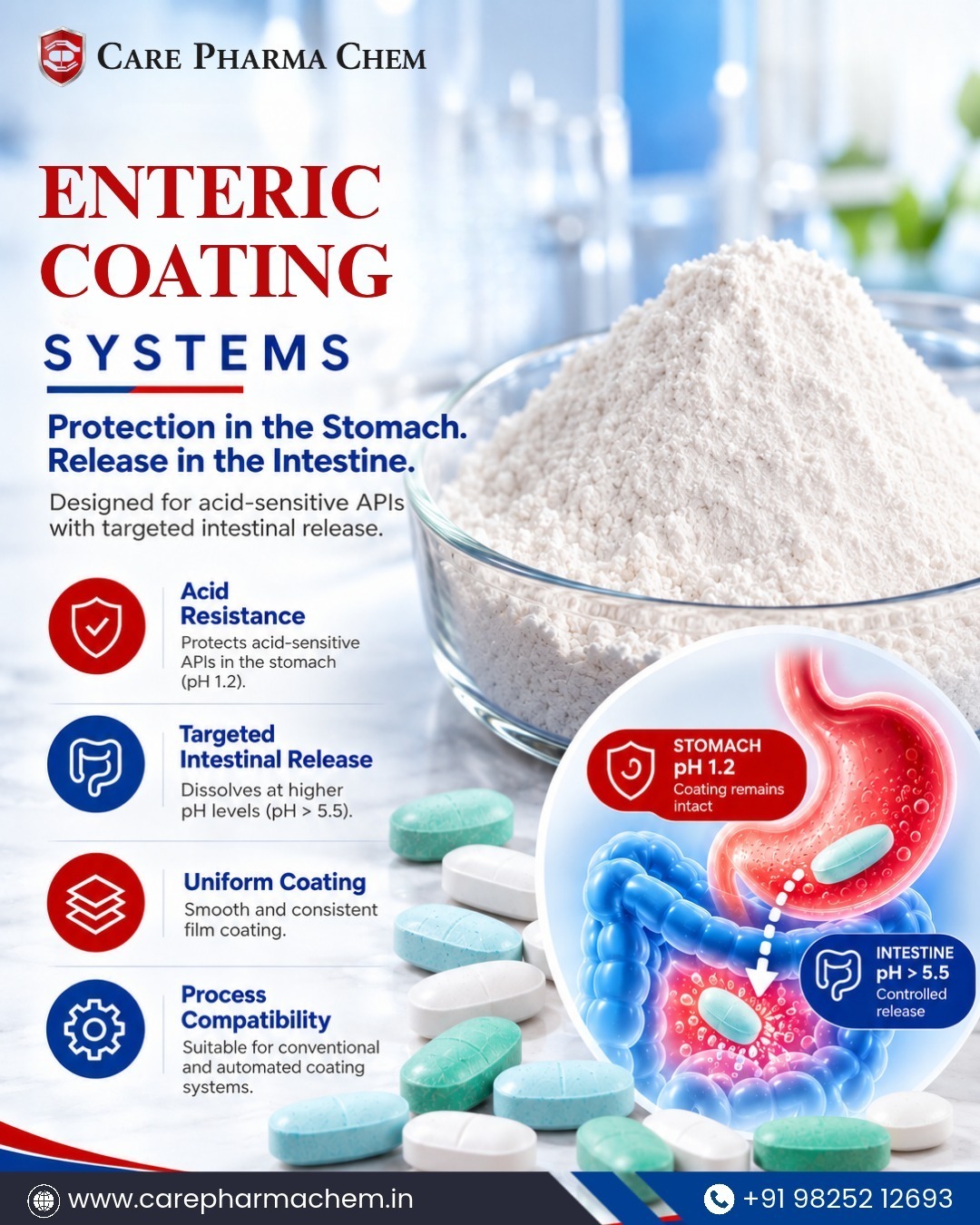
An Enteric Coating System is a pharmaceutical coating designed to protect tablets, capsules, or other suitable dosage forms from the stomach's acidic environment. It uses specialized polymers that respond to pH changes, keeping the coating intact in the stomach and dissolving at a specified higher pH.
Unlike conventional film coatings, Pharmaceutical Enteric Coating formulations are designed to provide delayed or intestinal release when needed. Their performance depends on polymer selection, coating thickness, formulation compatibility, and manufacturing conditions.
How Does an Enteric Coating System Protect Pharmaceutical Ingredients
A well-developed enteric coating system can support pharmaceutical product performance in several ways.
1. Protects Against Stomach Acid
Some active pharmaceutical ingredients (APIs) may degrade in acidic conditions. An enteric coating creates a protective barrier that limits exposure during the intended gastric phase.
2. Supports Targeted Intestinal Release
Enteric polymers dissolve at a specified pH. When the coated dosage form reaches an environment that meets the formulation's dissolution requirements, the coating dissolves and releases the medicine.
3. Helps Maintain Ingredient Stability
For acid-sensitive formulations, an appropriate Enteric Film Coating System may help preserve active-ingredient stability before release. The level of protection depends on the formulation and should be confirmed through suitable testing.
4. Promotes Uniform Coating Quality
Consistent film formation is essential for achieving the intended protective properties. Proper formulation preparation, spray application, drying conditions, and process monitoring help manufacturers obtain uniform coating coverage across production batches.
5. Supports Delayed-Release Formulations
An enteric coating can delay the release of certain medicines until they reach a suitable intestinal environment. This approach may also help medicines that require reduced stomach exposure, depending on their intended use and formulation design.
What Materials Are Used in an Enteric Coating System
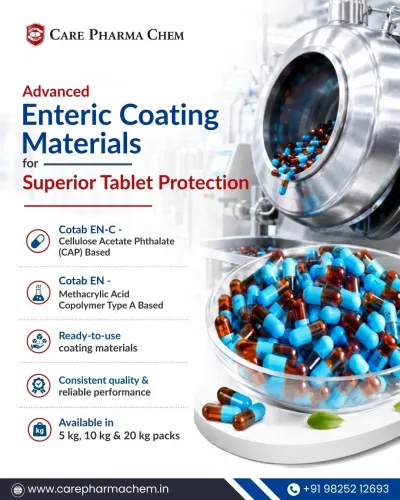
Selecting suitable Enteric Coating Materials is essential for achieving the required acid resistance and dissolution performance. Common options include:
* Methacrylic Acid Copolymers: pH-sensitive polymers used in formulations designed for delayed or intestinal release.
* Cellulose Acetate Phthalate (CAP): A cellulose-based polymer used in certain enteric coating applications.
* Hydroxypropyl Methylcellulose Phthalate (HPMCP): A modified cellulose polymer suitable for pH-dependent coating formulations.
* Hydroxypropyl Methylcellulose Acetate Succinate (HPMCAS): A polymer used in selected enteric and delayed-release formulations.
The most suitable material depends on the active ingredient, desired release profile, dosage form, processing equipment, and applicable pharmaceutical requirements.
What Are the Applications of an Enteric Coating System
An Enteric Coating System for Tablets is used in pharmaceutical applications that require protection from stomach acid or delayed drug release.
Common applications include:
* Acid-Sensitive APIs: Helps protect suitable ingredients from acidic gastric conditions.
* Delayed-Release Tablets: Supports release after the dosage form passes through the stomach.
* Intestinal Drug Delivery: Helps deliver medicines to an environment with the appropriate pH for coating dissolution.
* Gastrointestinal Formulations: Supports dosage forms designed to minimize release in the stomach.
* Pharmaceutical Research and Development: Helps formulators develop and evaluate pH-dependent release profiles.
The intended application should determine the coating formulation and the testing needed to demonstrate its performance.
How to Choose the Right Enteric Coating Formulation
Choosing the right Pharmaceutical Enteric Coating requires assessing the product's functional and manufacturing requirements.
Consider these factors before selecting a formulation:
* Polymer Selection: Choose a polymer suited to the required acid resistance and release behavior.
* Target Dissolution pH: Determine the pH range at which the coating should dissolve.
* Coating Uniformity: Assess whether the formulation can provide consistent coverage.
* Coating Weight Gain: Establish a suitable coating level through formulation development and testing.
* Equipment Compatibility: Confirm that the material is suitable for the available coating equipment.
* Processing Conditions: Evaluate spray rate, drying temperature, airflow, and other relevant process parameters.
* Stability and Compatibility: Check that the coating does not adversely affect the active ingredient or dosage form.
* Quality Testing: Perform suitable dissolution, stability, and other required quality assessments.
Working with an experienced coating material supplier helps pharmaceutical manufacturers evaluate formulations that meet their product specifications.
Finding an Enteric Coating System Supplier in Gujarat
Pharmaceutical manufacturers looking for an Enteric Coating System Supplier in Gujarat should evaluate formulation suitability, technical documentation, product consistency, and compatibility with existing production processes.
Contact Care Pharma Chem to discuss pharmaceutical coating material requirements and identify suitable solutions. Buyers should confirm current product availability, technical specifications, and application suitability directly with the company.
Businesses looking for an Enteric Coating System in Ahmedabad can discuss their formulation and manufacturing needs with the supplier. Similarly, companies looking for an Enteric Coating System Distributor in India should assess supply arrangements, product documentation, and technical support before placing an order.
An Enteric Coating System is a key component of pharmaceutical formulations that need protection from stomach acid and controlled release under specific intestinal conditions. By selecting appropriate pH-sensitive polymers and maintaining consistent manufacturing processes, pharmaceutical manufacturers can develop coatings that support acid resistance, ingredient stability, and the intended release profile.
Careful evaluation of materials, processing parameters, and dissolution performance is essential for achieving reliable results. Contact Care Pharma Chem to discuss your pharmaceutical coating requirements and enquire about suitable enteric coating solutions for your manufacturing process.
Frequently Asked Questions (FAQs)
1. What is an enteric coating system used for?
An enteric coating system protects suitable pharmaceutical ingredients from stomach acid and delays drug release until the coating encounters the appropriate intestinal conditions.
2. How does enteric coating protect acid-sensitive APIs?
It forms a pH-sensitive barrier that resists acidic gastric conditions for a specified period. The coating then dissolves under suitable conditions, releasing the active ingredient.
3. Which polymers are commonly used in enteric coating?
Common polymers include methacrylic acid copolymers, cellulose acetate phthalate (CAP), HPMCP, and HPMCAS. The appropriate option depends on the intended release profile and formulation requirements.
Keywords